

A Guide to Preventing Household Falls at Home
Our guide to preventing household falls shares practical, dignified steps for safer daily life at home, covering lighting, footwear, layout and support.
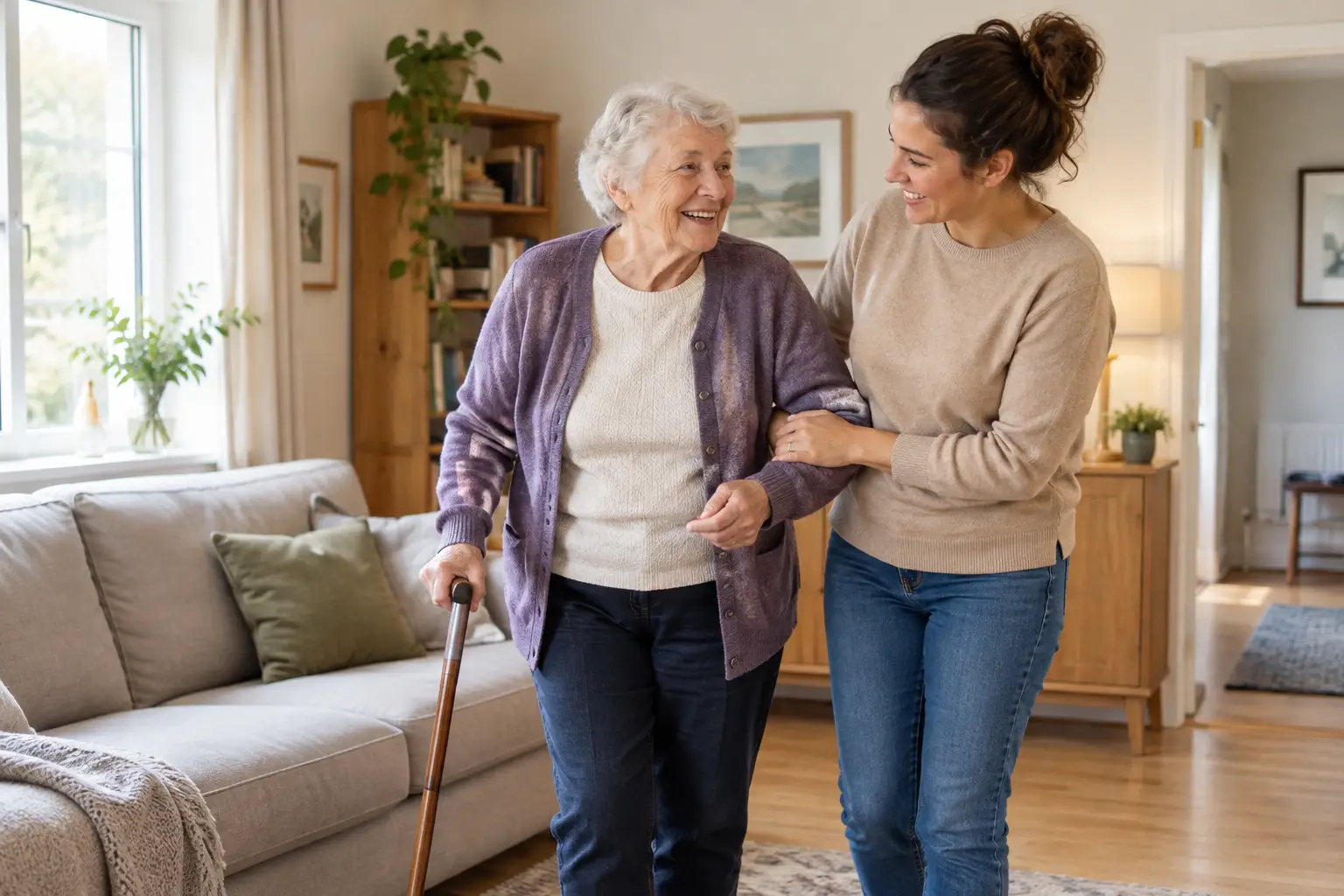
A fall at home can change the rhythm of everyday life in an instant. Often, it is not one dramatic hazard that causes it, but a familiar doorway crossed in poor light, a loose slipper, a rushed trip to the bathroom or an item left on the stairs. This guide to preventing household falls focuses on thoughtful changes that support confidence, comfort and independence without making a home feel clinical.
The aim is not to restrict how someone lives in their own space. It is to make ordinary routines easier to manage, while recognising that needs, mobility and confidence can change over time. For families, a calm and practical review of the home can also replace uncertainty with a clearer plan.
Start with the routines that happen every day
The best place to begin is not with a long shopping list. Think about a typical day: getting out of bed, washing and dressing, making a drink, answering the door, moving between rooms and settling in for the evening. These are the moments when someone may be tired, distracted or carrying something.
Walk through the home at the time each routine usually happens. A hall that seems perfectly safe during daylight may feel very different after dusk. A route to the kitchen may be clear until a drying rack, pet bowl or bag is placed in the way. Looking at the home through the lens of everyday movement helps reveal risks that are easily missed.
It can help to ask simple questions. Is there a clear place to put essentials? Is there something stable to hold when standing up? Is the route from the bedroom to the bathroom easy to see? Does the person have to stretch, twist or hurry to reach frequently used items? Small practical answers can make a meaningful difference.
Create clear, well-lit routes through the home
Clutter is not always a sign of carelessness. Homes hold memories, possessions and the practical details of daily life. The priority is simply to keep main walking routes clear and predictable. Hallways, stairways, landings and paths around the bed deserve particular attention.
Remove trailing cables where possible, keep bags and shoes away from stairs, and avoid placing low furniture where it narrows a route. Rugs can add warmth and character, but curled edges and rugs that slide underfoot need addressing. Depending on the flooring, a non-slip backing or choosing not to use a rug in a high-traffic area may be the safer option.
Lighting deserves the same care. Replace dim bulbs, make sure switches are easy to reach, and consider whether a lamp or night light would make evening journeys more comfortable. Light switches at both ends of a staircase are useful where practical. Curtains and blinds should be easy to operate so that rooms receive enough natural light during the day.
Give extra attention to stairs and entrances
Stairs are part of daily life for many households, which is why consistency matters. Each step should be clear, dry and adequately lit. Avoid leaving items on the stairs, even temporarily, and make sure handrails feel secure. A contrasting edge on a step may help some people judge its position more easily, although the most suitable approach depends on the individual and the home.
At the front and back door, look for uneven paving, slippery leaves, poor lighting and awkward thresholds. Wet weather can make a familiar entrance less predictable. Keeping outdoor routes tidy and ensuring there is a stable place to pause while opening the door can make arrivals and departures feel more manageable.
If navigating stairs or a particular entrance has become noticeably harder, it is worth discussing this with the person rather than assuming they will mention it. A respectful conversation can identify whether a change in routine, equipment or professional assessment would be helpful.
Make the bathroom safer without losing its comfort
Bathrooms combine smooth surfaces, water and frequent changes of position, so they require careful planning. Keep towels, toiletries and clothing within easy reach to reduce bending or overreaching. A non-slip mat may be useful, provided it lies flat and stays firmly in place.
The shower or bath area should be considered honestly. Stepping over a high bath side, standing on one leg while drying, or reaching for a towel across the room can all create an unstable moment. Grab rails, shower seating and other adaptations may be appropriate, but their suitability and fitting should be considered carefully for the individual and the property.
A clear route to the bathroom is equally valuable, especially overnight. Keep the floor dry, avoid loose bath mats, and make sure enough light is available before someone starts walking. The goal is to make a private daily routine feel calm and dignified, not rushed or precarious.
Support steadier movement in the kitchen and bedroom
In the kitchen, commonly used cups, plates and food should be stored between waist and shoulder height where possible. This reduces the need to use a step stool or stretch into high cupboards. Spills should be dealt with promptly, and worktops should be organised so that making a drink or meal does not involve carrying hot items across a cluttered room.
In the bedroom, consider whether getting in and out of bed feels secure. A bedside lamp, a clear path and a stable chair for dressing can all help. Clothing and footwear are best prepared before they are needed, rather than searched for while standing or balancing.
Footwear is sometimes overlooked because it is so familiar. Well-fitting shoes or slippers with a secure heel and a grip suitable for indoor surfaces can offer more confidence than loose, worn or backless alternatives. What works best will vary with the person, their usual routine and the floors in their home.
Notice changes early and respond with respect
A near miss matters. So does a new tendency to hold onto furniture, avoid a room, move more slowly or leave tasks until someone else is present. These changes do not automatically mean a person has lost their independence. They may simply indicate that the home or level of support needs reviewing.
There are many reasons why someone may feel less steady, including a change in health, eyesight, pain, fatigue or medication. A GP, pharmacist, district nursing team or NHS 111 can advise on the right next step where there is a health concern. If a fall results in a serious injury, severe pain, a head injury, sudden confusion or an inability to get up, seek urgent medical help.
Families can make these conversations easier by focusing on what would help the person continue doing the things that matter to them. “Would a little more support in the morning make this easier?” is often more constructive than taking over a task without discussion.
Consider practical support at home
Household fall prevention is not only about adaptations. Regular, dependable support can reduce the pressure that builds around daily tasks. Help with personal care, dressing, meal preparation, light household routines or accompanying a person through parts of their day may provide reassurance while preserving choice and familiar habits.
The right arrangement depends on the person’s preferences, the layout of their home and the support already available from family or friends. A free assessment can be a useful opportunity to talk through routines, identify areas of concern and understand what personalised home care could look like. Clear communication should remain central, particularly when several relatives are involved in arranging support.
For people and families in Burton upon Trent, Swadlincote and the surrounding confirmed local areas, Luxuricare can discuss home support with a focus on dignity, safety and the person’s own way of living. A considered care plan should fit around the individual, rather than asking them to fit around a service.
A safer home is rarely created through one large change. It is built through attentive details: a clear path, reliable light, a comfortable routine and the confidence that help can be arranged when it is needed.
Talk it through with someone local
A free care assessment is a conversation in your own home, not a sales visit. No charge, and no obligation to arrange anything.
More advice
Mobility Support for Older Adults at Home
Thoughtful mobility support for older adults can protect confidence, safety and choice at home. Learn how individual care can make day-to-day life easier.
Dementia Care at Home That Respects Life
Understand dementia care at home: practical ways to support safety, routine and dignity, plus when personalised home care may help your family locally.
Royal Derby Hospital Discharge and Home Care
Royal Derby Hospital discharge explained: practical questions, home care planning and thoughtful support for a safe, dignified return home with clarity.